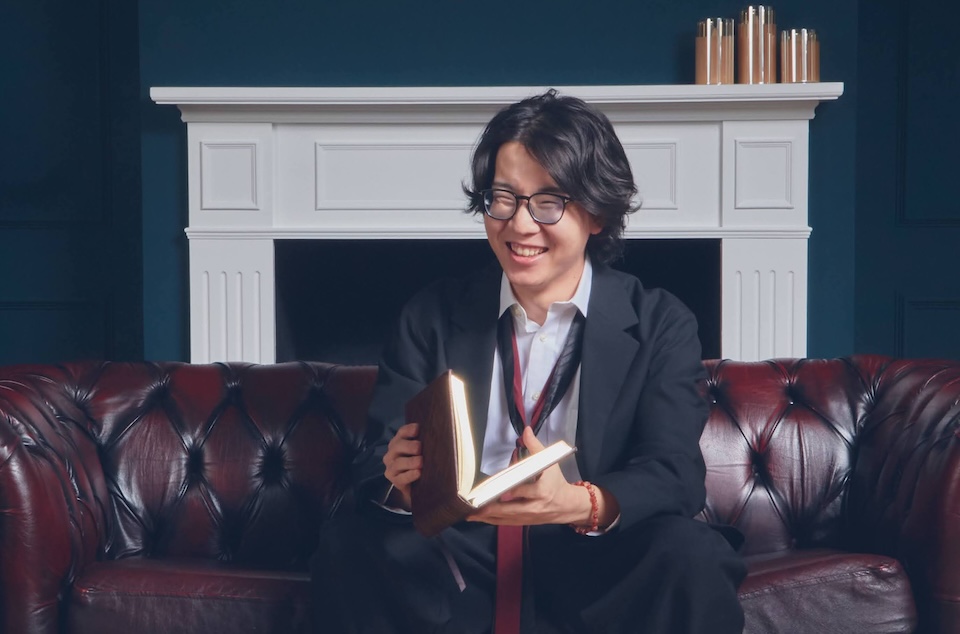
I am a Ph.D. candidate at the Human-Computer Interaction Institute (HCII) in the School of Computer Science at Carnegie Mellon University, where I am advised by Mayank Goel. I envision AI not as a tool that waits for our requests, but as a partner that senses our everyday lives and knows when and how to step in to empower us, even amid noisy sensing and evolving needs. My research bridges ubiquitous sensing, human–AI interaction, and computational modeling, grounded in healthcare deployments. This includes (1) machine perception robust to uncertainty; (2) interaction policies that balance AI initiative with human agency; and (3) a science of long-term human–AI co-adaptation.
Two health AI assistants I developed have been deployed at four clinical sites across the US and Europe, serving more than 300 patients and families: post-operative wound care for skin cancer patients and daily activities for people living with dementia, and family-centered care for children with ADHD-related hyperactivity. I also led the industry transfer of my conversational behavior-sensing system, used by therapy and coaching companies in Japan for over six years across more than 1,000 sessions.
I have published 35+ peer-reviewed full papers (11 ACM CHI, 4 UIST, 6 IMWUT), receiving a CHI Best Paper Award and four Honorable Mention Awards. I have also received the ACM UbiComp/ISWC Gaetano Borriello Outstanding Student Award (2025) and the IEEE Pervasive Computing Emerging Rockstar (2026), have been named to Forbes Asia 30 Under 30 in Healthcare & Science (2024) and MIT Technology Review's Innovators Under 35 Japan (2025), and have been supported by the Funai Foundation, Masason Foundation, Snap Research Fellowship, and Quad Fellowship.
📣 On the job market for 2026–27!
I'm seeking tenure-track faculty positions. If you know of relevant opportunities, I'd be grateful if you could reach out via email.
My CV is available here.